FREE Australia-wide shipping on inflatable kayaks • Shop now

Why Viking Kayaks Are So Expensive ??

Let’s Address the Question
Let’s be honest.
If you’ve been looking at Viking Kayaks, you’ve probably asked yourself:
Why Viking Kayaks are so expensive than other kayaks?
It’s a fair question.
And the answer is not just about price — it’s about design philosophy, performance, durability, and long-term value.
It Starts With Design – Not Price
Most kayaks on the market are designed with one major goal in mind:
fit as many units as possible inside a shipping container.
That usually means stackable shapes, compromises in hull design, and trade-offs in how the kayak actually performs on the water.
Viking Kayaks takes the opposite approach.
They are designed first for:
- Hydrodynamics
- Stability
- Efficiency
- Real paddling performance
- Durability over time
Key Point:
The goal is simple — build the best kayak possible, not the cheapest one to ship.
The goal is simple — build the best kayak possible, not the cheapest one to ship.
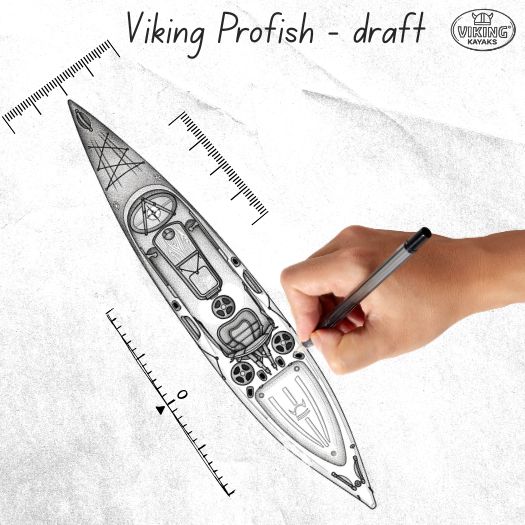

The Container Reality (This Changes Everything)
This is where many people don’t realise what is really happening behind the scenes.
In a standard 40ft container, a typical load of high-performance kayaks like Viking models may sit around 60 kayaks, depending on the model mix.
A more stackable, compromise-driven design can often fit up to 80 kayaks in the same container.
Same freight cost. More units. Lower shipping cost per kayak.
That means Viking starts at a disadvantage on paper — but by choice.
Why?
Because performance on the water matters more than container efficiency.
Because performance on the water matters more than container efficiency.
Performance vs Features (The Big Trade-Off)
Here’s the reality:
You cannot maximise everything at once.
Many cheaper kayaks focus on what looks attractive at first glance:
- More visible features
- More accessories
- Good-looking shapes
- Low upfront price
But to achieve that, something usually gets sacrificed:
- Hydrodynamics
- Paddling efficiency
- Tracking
- Real stability in changing conditions
That’s why some kayaks feel slow, awkward to paddle, or stable only in a very limited sense.
Viking’s approach:
Focus on how the kayak actually performs on the water — not just how it looks on paper.
Focus on how the kayak actually performs on the water — not just how it looks on paper.

Manufactured in New Zealand — With Real Quality Control

One of the most important differences is where and how Viking Kayaks are made.
Viking Kayaks are designed and manufactured in New Zealand, with production standards focused on consistency, refinement, and long-term performance.
This is very different from many lower-cost kayaks that are mass-produced in China, where the priority is often cost efficiency, high-volume output, and shipping convenience.
Key Difference:
Controlled production and strict quality control — not just volume and cost.
Controlled production and strict quality control — not just volume and cost.
That manufacturing philosophy is one of the key reasons Viking Kayaks feel more refined, more consistent, and more reliable over time.

Premium Materials, Plastics & Components 💎
Material quality is where the difference becomes more visible over time.
Viking Kayaks are made using high-grade polyethylene and quality components chosen for durability, structural integrity, and real-world use.
That matters because a kayak is not just a shape — it is the combination of plastics, fittings, hardware, finish, and how all those parts hold up after years of sun, storage, transport, current, and repeated use.
With lower-cost kayaks, compromises are often made not only in hull design, but also in the grade of plastic and the consistency of the fittings and components used across the product.
This is where you start to notice the real difference in:
- UV resistance
- Structural integrity
- Rigidity and consistency
- Finish quality
- Long-term durability
The point is not just how a kayak looks on day one — it’s how it performs and how well it holds together after years of real use.
Not All Things Made in China Are the Same
Let’s be clear about something.
Not everything made in China is low quality.
In fact, China is capable of producing extremely high-quality products — when the right materials, manufacturing standards, and quality control processes are in place.
The real difference comes down to how products are made — and what they are designed to prioritise.
Key Point:
Hard-shell kayaks are large, bulky products — which makes shipping one of the biggest cost factors.
Hard-shell kayaks are large, bulky products — which makes shipping one of the biggest cost factors.
To reduce costs, many manufacturers optimise for:
- High-volume production
- Lower material costs
- Faster manufacturing cycles
- Stackable designs for shipping efficiency
This is where compromises often happen.
Not because manufacturers don’t know how to build better products — but because the business model requires cost reduction at every step.
Over time, this can affect:
- Material consistency
- Structural integrity
- Long-term durability
- Real-world performance
The real difference:
It’s not about where something is made — it’s about what the product is designed to prioritise.
It’s not about where something is made — it’s about what the product is designed to prioritise.
At this point, the difference becomes much clearer when you compare them side by side.
Viking Kayaks vs Typical Low-Cost Kayaks
The key differences between Viking Kayaks and cheaper kayaks come down to design, manufacturing, performance, and long-term durability.
A clear comparison of what actually makes the difference on the water.
Manufacturing is not just about where a kayak is made — it’s about how consistently it performs over time.

After-Sales Support (The Hidden Factor)
This is something many buyers don’t think about until they need it.
With many lower-cost brands, a common frustration is what happens after the purchase:
- Spare parts can be hard to find
- Support can be limited
- Warranty issues can be difficult to resolve
That may not matter on day one — but it matters a lot down the track.
With Viking, you are not just buying a kayak. You are buying into a platform with parts, backing, and long-term support.
Hidden value:
Good after-sales support becomes more important the longer you own the kayak.
Good after-sales support becomes more important the longer you own the kayak.
Who Actually Chooses Viking Kayaks?
One of the strongest indicators of real value is to look at who chooses the product.
Viking Kayaks are chosen not only by private paddlers, but also by people and organisations who depend on reliability and real-world performance:
- Serious anglers and offshore paddlers
- Explorers and adventure users
- Universities and research teams
- Marine organisations
- Schools and training programs
- Kayak Rental businesses
These decisions are not based on hype. They are based on what performs, what lasts, and what can be trusted.

It’s Not Just for Anglers — It’s a Family Decision
One of the most interesting things we see is who actually chooses Viking Kayaks.
It’s not only experienced anglers or offshore paddlers.
More and more often, it’s parents, families, and grandparents buying for their kids or grandkids.
And their decision process is very different.
They are not buying the cheapest option.
They are choosing something they can trust.
They are choosing something they can trust.
When a parent or a grandparent invests in a kayak, they are thinking about stability, predictability, ease of use, durability, and a product that won’t let them down when it matters.
They are not comparing features on paper. They are asking a much simpler — and much more important — question:
“Is this something I feel confident putting my family on?”
And that’s where Viking stands out.
Because when the decision is about trust, safety, and long-term value — price becomes secondary.
Because when the decision is about trust, safety, and long-term value — price becomes secondary.

Built for Real Conditions
Viking Kayaks are not designed only for calm water or short paddles.
They are built for:
- Offshore fishing
- Surf launches
- Wind and current
- Long sessions on the water
A kayak that performs in real conditions is a very different product from one designed mainly around price and shelf appeal.


Long-Term Value vs Cheap Price
This is the mindset shift that matters most.
A cheaper kayak may have a lower upfront cost.
But if it paddles poorly, wears out faster, lacks support, or leaves you wanting something better, the “saving” becomes less meaningful over time.
A Viking Kayak may cost more upfront.
But it delivers a better experience every time you paddle — and that value becomes more obvious the longer you own it.
The Real Reason They Cost More
It’s not hype.
It’s not branding for the sake of branding.
It’s not simply a premium price tag.
It’s the result of deliberate choices:
- Design over shipping efficiency
- Performance over feature overload
- Durability over shortcuts
- Real use over showroom appeal
- Support over disposable product mentality
Bottom line:
Viking Kayaks are built differently — and that difference shows up in the price for a reason.
Viking Kayaks are built differently — and that difference shows up in the price for a reason.

Final Thought
If you just want something cheap to float on the water, Viking is probably not the answer.
But if you want performance, confidence, long-term reliability, and a kayak built for real conditions, then the price starts to make a lot more sense.
In other words, they are not expensive for no reason. They are expensive because they are built to do the job properly.
Ready to Experience the Difference?
Whether you're chasing fish offshore or planning your next adventure, choosing the right kayak makes all the difference. Let’s find the perfect setup for you.