FREE Australia-wide shipping on inflatable kayaks • Shop now


How to Catch Tuna from a Kayak | Practical Strategies, Setup & Real Offshore Tactics – PART 1
How to Catch Tuna from a Kayak:
Practical Strategies, Setup & Real Offshore Tactics
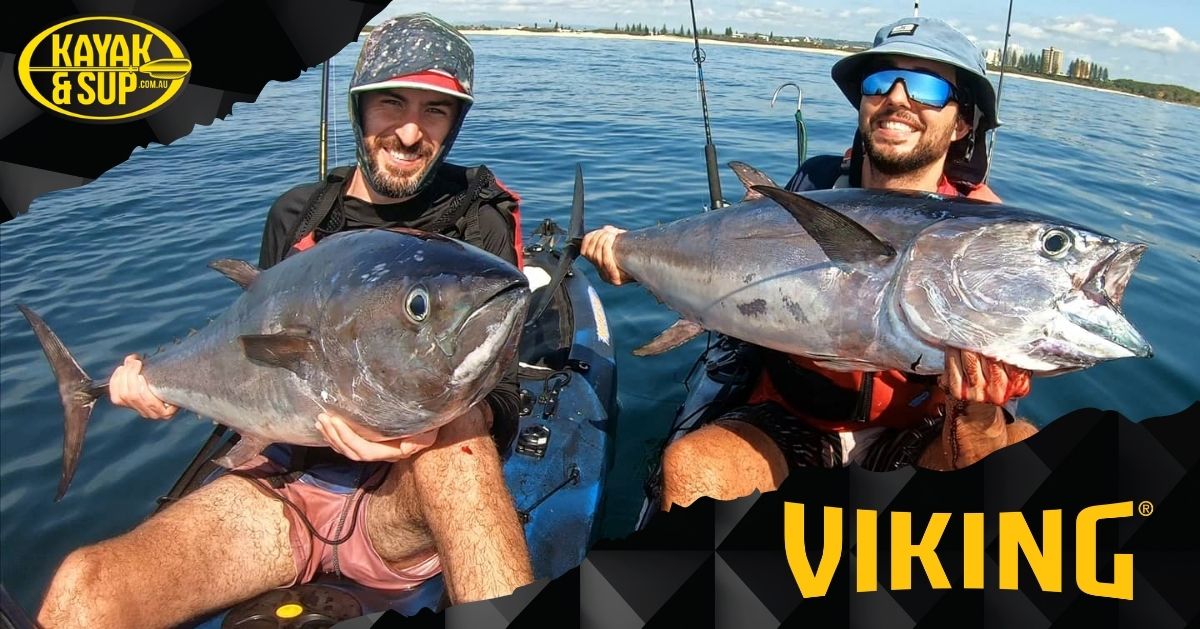
Tuna are one of the most electrifying species you can target from a kayak.
Fast, powerful and unpredictable, they can turn a calm offshore paddle into pure chaos in seconds. One moment you are scanning birds and bait. The next, your kayak is being dragged across open water by a fish that refuses to stop.
The moment tuna explode on a bait ball beside your kayak, everything changes.
But catching tuna consistently from a kayak rarely happens by accident.
Success usually comes from understanding how to read the ocean, how to approach feeding fish, and how to organise your kayak setup before the action begins.
Why Tuna Fishing from a Kayak Is So Effective
Many anglers assume tuna are purely a big-boat game.
In reality, kayaks offer several surprising advantages when chasing pelagic fish offshore.
First, kayaks are incredibly quiet. Without engine noise or prop wash, you can approach feeding fish with far less disturbance than a powerboat.
Second, presentations look more natural. Lures and baits move through the water without turbulence from a motor.
Third, mobility. A kayak allows you to reposition quickly around bait schools, current lines and moving bust-ups.
Finally, there is something unique about fighting tuna from a kayak.
When a strong tuna runs, the kayak often moves with the fish. Instead of fighting against a fixed boat, the kayak becomes part of the drag system — reducing pressure on your line while creating one of the most exciting experiences in fishing.
Follow the Birds — Your Offshore Radar
One of the most reliable ways to locate feeding tuna offshore is by watching birds.
Experienced anglers often look for birds before they even start looking for fish.
Birds act as a natural radar system above the water. When tuna push baitfish toward the surface, birds gather almost instantly.
From a distance you may not see the tuna themselves — but you will almost always see the birds.
The behaviour of the birds can reveal a lot:
- Circling birds often indicate bait holding below the surface
- Low hovering birds usually track moving bait schools
- Aggressive diving birds often signal active feeding tuna
If you learn to read bird behaviour correctly, you can locate feeding tuna far more consistently offshore.
Practical tip:
Approach bird activity slowly and avoid charging directly through the centre of the action.
Instead, work the edges of the bait ball where tuna often circle and pick off injured baitfish.
Where to Find Tuna from a Kayak
Finding tuna offshore is rarely about randomly paddling around hoping to see fish. Experienced kayak anglers focus on key ocean features that concentrate bait and predators.
When several of these factors combine in the same area, the chances of encountering tuna increase dramatically.
- Current lines where different water masses meet
- Temperature breaks that concentrate baitfish
- Bait balls being pushed toward the surface
- Reef edges where structure meets open water
- Pressure points created by wind, tide and current
Learning to recognise these offshore indicators will dramatically improve your ability to locate tuna from a kayak.
Practical Advice: Tuna often hit the edges of a bust-up rather than the centre.
Position yourself ahead of the moving bait school and let the fish come toward you.
Don't Charge Straight Into the Bust-Up
When tuna erupt on the surface, it is easy to panic and paddle straight toward the action.
That is usually the fastest way to shut the whole bite down.
Tuna are extremely sensitive to disturbance. Charging directly into the feeding zone often pushes the fish deeper and breaks the bait school apart.
Instead, slow down early.
Observe the direction the bait is moving and stop 20–40 metres before the action. From there you can cast or troll across the edge of the feeding zone.
Many of the best strikes happen just outside the chaos where larger fish pick off escaping bait.
Reading the Whole Zone: Bait, Current and Structure
Birds are only part of the equation.
To consistently find tuna, you also need to identify where bait tends to concentrate.
Some productive offshore zones include:
headlands and points
current lines
trenches or drop-offs
reef edges
areas where bait shows on the sounder
A particularly productive scenario is a point with a flat in front and deeper water behind it. If current pushes bait through that zone, predators often patrol nearby.
When birds, bait and current align in the same area, your chances increase dramatically.
Pro Move: Do not hunt tuna directly. Hunt the combination of
birds + bait + current. When those three elements line up, tuna are rarely far away.
How I Organise My Kayak for Tuna Fishing
One of the biggest advantages in tuna fishing is being ready before the fish show up. When tuna suddenly explode on the surface, you often only have seconds to react. That is why a clean and simple rod layout on your kayak makes a huge difference.
A practical offshore kayak setup often revolves around three rods, each one ready for a different opportunity.
🎯 Spinning Rod – Always Ready
This is your reaction rod. Keep it in the most accessible rod holder so you can grab it instantly when tuna appear within casting range.
Typical lures:
- Metal casting lures
- Soft plastics
- Small baitfish imitations
🚤 Trolling Rod
While moving between zones or searching for activity, trolling keeps a lure or bait working behind the kayak.
This rod can run:
- Dead bait
- Trolling lure
- Jighead with soft plastic
Trolling becomes especially useful when wind makes casting difficult.
🐟 Soft Plastic / Jighead Rod
A third rod can run a soft plastic presentation, either cast or slow-trolled.
Soft plastics are extremely effective for tuna because they imitate small baitfish and are relatively inexpensive compared with many hard lures.
Many anglers underestimate how deadly this simple setup can be.

How to catch tuna from a kayak: Trolling Logic
Trolling is one of the most effective ways to search for tuna from a kayak. It allows you to cover water efficiently while scanning for birds, bait schools and surface activity. But once you start trolling two or more rods, the system becomes much more technical.
The key is presentation separation. If your lures or baits are not working at different depths and distances, tangles become far more likely — especially during turns, sudden stops, or when a fish strikes one of the rods.
The golden rule:
the deeper the presentation, the closer it should be to the kayak.
The lightest lure or topwater presentation should always run the furthest back.
the deeper the presentation, the closer it should be to the kayak.
The lightest lure or topwater presentation should always run the furthest back.
Closest Rod
This rod should run the heaviest or deepest presentation. Because it works lower in the water column, keeping it close helps maintain clean separation.
Middle Rod
The middle rod usually runs a mid-depth presentation, creating space between the deep rod and the surface/topwater rod.
Furthest Rod
The furthest rod should always carry the lightest or most topwater-style presentation, giving it space to swim naturally without crossing the deeper lines.
Can you troll three rods from a kayak?
Yes — absolutely. But it increases complexity dramatically. The moment one rod gets hit, the whole system changes. A strike on one line can instantly affect the angle, tension and path of the other two.
This is why the depth rule becomes so important: deepest closest, lightest furthest. Without that structure, multi-rod trolling quickly becomes messy.
Practical Advice: Trolling multiple rods becomes far easier when using an electric motor.
A motor gives you much more consistent speed, and consistency is one of the biggest keys to keeping multiple lines working cleanly.
Turning and changing direction
When trolling with more than one rod, turning must be done with great care. This does not necessarily mean slowing down dramatically — it means changing angle slowly and progressively.
Sharp direction changes cause lines to swing across each other, especially when one lure is deep and another is riding near the surface. Gentle, progressive turns keep the spread cleaner and reduce tangles.
Warning: Stopping suddenly can be just as dangerous as turning too hard.
Depending on wind and current, your lines can swing forward and end up underneath or in front of the kayak.
That is one of the quickest ways to create a complete mess.
Best advice for beginners
If you are new to trolling from a kayak, start with one rod only. Learn how your kayak behaves in wind, how your lure tracks, how current affects your line angle, and how the kayak reacts when you stop or turn. Once that becomes second nature, adding a second and eventually a third rod becomes much easier and far more productive.

Best Kayak Trolling Speeds for Tuna
One of the biggest differences between trolling from a kayak and trolling from a boat is speed. Offshore boats can comfortably run much faster, but kayaks rely on paddling power, current, wind assistance, or sometimes an electric motor.
The good news is that tuna absolutely feed within realistic kayak trolling speeds. In fact, many presentations work beautifully when kept clean and consistent in the lower speed ranges a kayak can maintain.
Typical kayak trolling speeds for tuna
- 2 – 3 knots → slow search speed
- 3 – 4 knots → most common and effective range
- 5 – 6 knots → common for boats, but difficult to sustain from a kayak
Reality check: Most kayak tuna anglers should focus on presentations that work best up to 4 knots.
This speed range works very well for:
- soft plastics on jigheads
- small trolling lures
- bibbed minnows
- dead bait trolling rigs
Before sending a lure back into the spread, watch it beside the kayak for a few seconds. If it tracks straight and swims cleanly, you are probably in the right speed range. If it spins, blows out, or looks unnatural, adjust speed or lure choice.
Practical Tip: Small speed changes can trigger bites. A slight acceleration through a current line or a subtle directional change often makes a lure look more alive.
A Common Tuna Bite Most Kayak Anglers Learn the Hard Way
One very common tuna kayak fishing scenario happens while you are approaching a bust-up with a soft plastic still trolling behind the kayak.
You slow down, stop paddling, grab your spinning rod and begin casting into the feeding fish. At that exact moment, the soft plastic behind the kayak starts to lose speed and naturally sink through the water column.
And that is often when it gets eaten.
Why it works:
As the jighead and soft plastic slow down and begin to fall, they stop behaving like a trolling lure. Instead, they start to look like a wounded baitfish dropping away from the school — something tuna find very hard to ignore.
As the jighead and soft plastic slow down and begin to fall, they stop behaving like a trolling lure. Instead, they start to look like a wounded baitfish dropping away from the school — something tuna find very hard to ignore.
This means you should always stay alert when transitioning from trolling to casting. If you are running a soft plastic behind the kayak while approaching surface fish, be ready for that trolling rod to suddenly load up — even while you are already casting with another rod.
Rod leashes are essential
If you are trolling for tuna from a kayak, your rods should be leashed to the kayak. Tuna strikes are fast, violent and completely unforgiving. A rod that is not secured can disappear overboard in seconds.
- Use reliable rod leashes on every trolling rod
- Check clips and attachment points regularly
- Avoid weak DIY systems that can fail under load
- Secure rods especially when trolling multiple lines
Kayak & SUP Recommendation:
Using a high-quality rod leash is one of the simplest ways to protect your gear. If you need a reliable option, check out our Stainless Steel Kayak Rod Leash — designed specifically to keep rods secure during sudden strikes.
Using a high-quality rod leash is one of the simplest ways to protect your gear. If you need a reliable option, check out our Stainless Steel Kayak Rod Leash — designed specifically to keep rods secure during sudden strikes.
Warning: Most kayak rod-and-reel combos cost far more than a proper rod leash.
Losing a rod to a sudden tuna strike is painful, avoidable and completely unnecessary.
Using Soft Plastics for Tuna
Soft plastics are one of the most underrated tuna lures, especially from a kayak.
A realistic baitfish-profile plastic paired with a strong jighead can be cast, slow-trolled, or worked through bait schools.
Smaller profiles often work best because they mimic the size of the bait tuna are feeding on.
Jighead Weight Strategy
Carrying multiple jighead weights allows you to fish different depths.
For example:
lighter jigheads for surface activity
medium weights for mid-water fish
heavier heads when tuna are feeding deeper
This lets you adapt without changing the entire lure system.

Leader Setup for Tuna Kayak Fishing
Leader choice plays a major role in tuna fishing from a kayak. Tuna can be extremely fussy with line, especially around surface bust-ups or in clear offshore water where fish have time to inspect the presentation.
For that reason, many kayak anglers prefer a relatively long fluorocarbon leader. It improves stealth, adds a little cushioning during violent strikes, and helps give the lure or bait a more natural presentation.
Typical tuna kayak leader setup
- Leader length: 3 – 5 metres fluorocarbon
- Leader strength: 20 – 50 lb depending on the size of tuna around
Longer leaders can improve stealth while also providing a little extra shock absorption during sudden runs.
Some days tuna will happily eat heavier leader. Other days they become far more cautious — especially when feeding on small bait near the surface.
If you are casting lures or trolling close to bust-ups and not getting bites, it is often worth changing your leader before changing your lure. A thinner line can sometimes make all the difference.
Practical Advice: If tuna are clearly feeding around you but refusing your lure, try dropping to a thinner fluorocarbon leader before changing the whole setup.
The ideal leader strength always depends on tuna size, lure type, water clarity and how aggressively the fish are feeding. The goal is simple: stay as light as you reasonably can, while still having the confidence to land the fish.
Leader, Trace and Live Bait Flexibility
A strong braided main line matched to an appropriate leader gives you flexibility when targeting tuna from a kayak. Many anglers prefer braid because it offers excellent sensitivity, strong hook-setting power and efficient performance when trolling or working lures offshore.
The exact setup always depends on where you fish, what tuna you are targeting and what presentation you are running — but the goal remains the same: clean lure action, dependable connections and enough cushioning in the system to keep fish pinned all the way to the kayak.
A Proven Line System for Kayak Trolling
One proven approach for tuna trolling from a kayak is a braid main line matched to a relatively long fluorocarbon leader.
Why braid?
Because thinner braid creates less water resistance, which helps many trolling lures swim more cleanly. It also transmits vibration extremely well, allowing you to read the lure through the rod tip.
That matters more than many anglers realise.
If the lure is swimming correctly, the rod tip usually tells you.
If the lure fouls with weed, picks up debris, or loses its rhythm, the rod tip often tells you that too.
A longer fluorocarbon leader adds several advantages:
- lower visibility
- a little extra stretch
- knot protection during strikes
- improved handling close to the kayak
Some anglers also add a shorter, heavier trace section near the lure when required by the species, lure type or abrasion risk.
The exact lengths and breaking strains depend on where you fish, what tuna you are targeting, and what lures you are pulling — but the principle remains the same: clean lure action, good visibility control, and enough cushioning in the system to keep fish connected.
Live Bait Flexibility
If you are carrying live bait, your system also needs to stay flexible. Tuna anglers often deal with very different bait sizes on the same day — from smaller baitfish to larger live baits like slimies or yakkas.
That means being ready to adjust:
- hook size
- leader strength
- trace strength
- bait rigging method
A clean live bait system should still let the bait swim naturally while giving you enough confidence to handle a fast, violent tuna strike.
Practical Advice: If your trolling lure or live bait suddenly stops “feeling right” through the rod tip, check it immediately.
Weed, debris, poor tracking or a damaged bait can leave you towing a dead presentation without realising it.
Gear Tip: Tuna are powerful fish. Cheap or thin jighead hooks can bend or fail under load.
Always use strong saltwater hooks designed for pelagic species.

Match the Hatch
One of the most overlooked aspects of tuna fishing is matching the size of the bait.
Tuna can become extremely selective depending on what baitfish are present.
Some days they attack large bait aggressively. Other days they focus on tiny bait schools only a few centimetres long.
If your lure size does not match what tuna are feeding on, you may see fish exploding around you without getting a single strike.
A good tuna lure selection often includes:
small baitfish soft plastics
metal slugs
casting jigs
poppers and stickbaits
live bait when available
When in doubt, observe the bait being chased and try to match its size and profile as closely as possible.
Common tuna baitfish
pilchards
- gar fish
sauries
slimy mackerel
anchovies
- squid
Learn to Read Your Lure — Do Not Troll Blind
One of the most overlooked skills in kayak trolling is learning to read how your lure is actually swimming.
A lot of anglers simply send a lure out and hope for the best.
But effective trolling often comes down to understanding whether the lure is:
swimming cleanly
tracking properly
fouled with weed
being pulled too fast
being pulled too slowly
In many cases, your first and best feedback comes through the rod tip.
A healthy, consistent rod-tip vibration often means the lure is working properly.
A sudden change in that rhythm can mean weed, debris, or a lure that has dropped out of its ideal speed range.
This matters because many tuna lures — especially bibbed trolling lures — work best inside a relatively specific speed window.
Too slow, and they lose action.
Too fast, and they may blow out, track poorly or lose their natural swimming rhythm.
If you cannot read your lure, you are effectively trolling blind.
Bibbed Lures Still Deserve a Place in the Spread
While soft plastics, metals and live bait get a lot of attention today, bibbed trolling lures still deserve serious consideration in tuna fishing from a kayak.
A well-tuned bibbed lure can offer:
consistent swimming action
strong tracking
good speed control
excellent coverage when searching
They can be especially useful when you are covering ground and trying to locate fish before switching to more reactive techniques.
The key is not just choosing a bibbed lure — it is learning how that lure behaves at kayak trolling speeds.

Learn to Read Your Lure — Do Not Troll Blind
One of the most overlooked skills in kayak trolling is learning to read how your lure is actually swimming.
A lot of anglers simply send a lure out and hope for the best.
But effective trolling often comes down to understanding whether the lure is:
swimming cleanly
tracking properly
fouled with weed
being pulled too fast
being pulled too slowly
In many cases, your first and best feedback comes through the rod tip.
A healthy, consistent rod-tip vibration often means the lure is working properly.
A sudden change in that rhythm can mean weed, debris, or a lure that has dropped out of its ideal speed range.
This matters because many tuna lures — especially bibbed trolling lures — work best inside a relatively specific speed window.
Too slow, and they lose action.
Too fast, and they may blow out, track poorly or lose their natural swimming rhythm.
If you cannot read your lure, you are effectively trolling blind.

What Makes a Good Tuna Trolling Rod from a Kayak?
When trolling for tuna from a kayak, many anglers focus on power first.
But in reality, rod design is often more important than raw stiffness.
A very effective tuna trolling rod from a kayak is usually:
mid-length
light in the tip
medium in action
Why?
Because a lighter tip does several important jobs at once.
It helps you monitor the lure’s swimming action through rod-tip vibration.
It helps you detect when the lure has fouled with weed or kelp.
And it gives the fish a split second more cushioning on the strike — which can be critical when trolling with lighter hooks or smaller lures.
A medium action also helps absorb impact during fast strikes and reduces the chance of pulled hooks.
Another advantage is fish control close to the kayak.
A mid-length rod is usually easier to manage when the tuna gets boatside and starts circling under pressure. It also reduces the risk of high-sticking compared with long, stiff rods.
In short, the best kayak trolling rods are not always the most brutal ones.
They are the ones that let the lure work properly, cushion the strike, and stay efficient right through the fight.

Reel Characteristics That Matter More Than Maximum Drag
For tuna fishing from a kayak, the best reel is not always the one with the biggest drag number on the box.
What matters more is how the reel behaves when the fish strikes and during the first violent run.
A good tuna reel should offer:
a very smooth drag
fast line recovery
predictable drag startup
enough spool performance to respond quickly to sudden runs
A jerky drag can create problems immediately. It can pull hooks, pop lighter lines, or enlarge the hook hole during the fight.
Fast line recovery is also extremely valuable from a kayak. If a tuna suddenly turns and runs toward you, quick pickup helps you stay connected and reduce slack.
This becomes even more important when trolling multiple rods, because clean line management can save time and reduce chaos when a fish strikes.
The goal is not only to stop the fish.
The goal is to stay connected cleanly from strike to landing.
Fighting Tuna from a Kayak
Once hooked, tuna are relentless fighters.
Expect long runs, sudden direction changes and the possibility of being towed across the water.
This is where kayak fishing becomes truly unique.
Instead of resisting the fish from a fixed boat, the kayak moves with it, reducing stress on the line and tackle.
During the fight:
keep steady pressure
avoid exaggerated rod lifts
use controlled, efficient movements
stay calm if the fish runs under the kayak
The goal is efficiency rather than brute force.
This is just the beginning
This guide is only the start of a longer series dedicated to tuna fishing from a kayak. Over the coming weeks we’ll keep publishing practical offshore content designed to help you understand tuna behaviour, refine your setup and land more fish with confidence.
What’s coming next:
- Landing and handling tuna safely from a kayak
- Choosing the right tackle for tuna kayak fishing
- Dead bait rigs and trolling systems explained
- Topwater lures, casting techniques and when to use them
- Soft plastic jighead setups for tuna
- Fight strategies to increase your landing success
Stay tuned
If you want to follow the next chapters of this tuna series,
keep an eye on the Kayak and SUP blog.
We’ll continue building this guide step by step with practical,
real-world kayak fishing knowledge.
Final note: In the next chapters we’ll dive deeper into the gear, techniques and
strategies that make tuna fishing from a kayak both effective and safe.
From lure selection to fight management, the goal is simple:
help you hook, control and land tuna from your kayak with confidence.
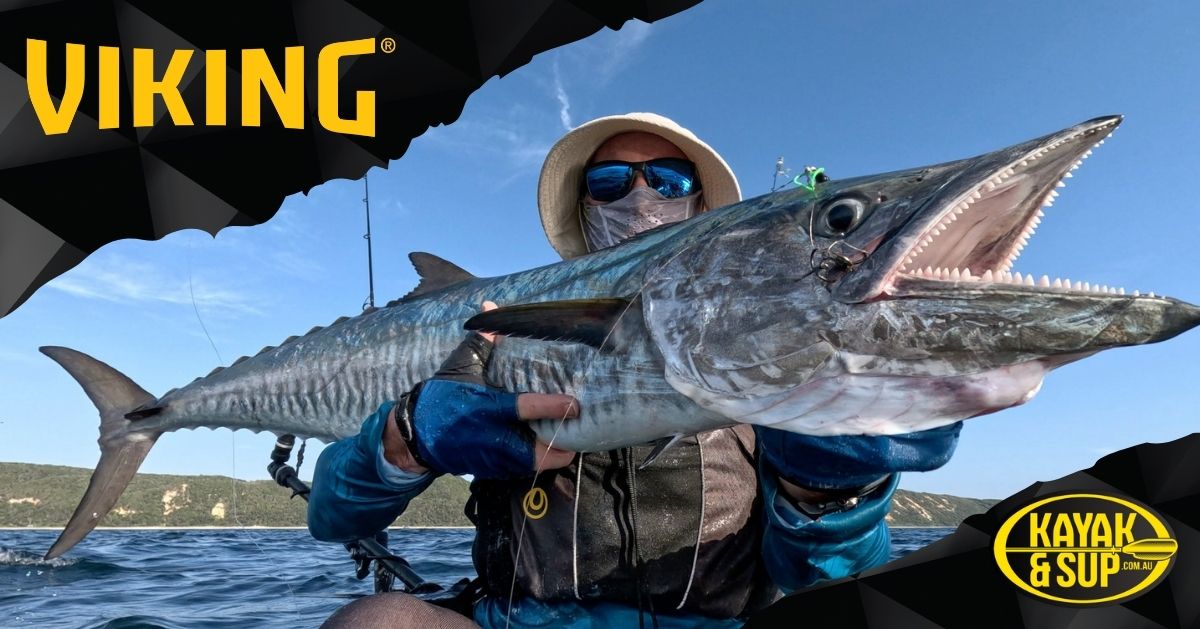
Also interested in Spanish mackerel from a kayak?
Tuna are only part of the offshore story. If you’re fascinated by fast pelagic action, bait movement and real tactical kayak fishing, our Spanish mackerel guide is another must-read.
It explores the mindset, positioning and practical on-water factors that matter when targeting one of the most exciting offshore species available to kayak anglers.
Explore the Spanish Mackerel Guide