FREE Australia-wide shipping on inflatable kayaks • Shop now


Kayaking Over 60: An Easier Way Back on the Water
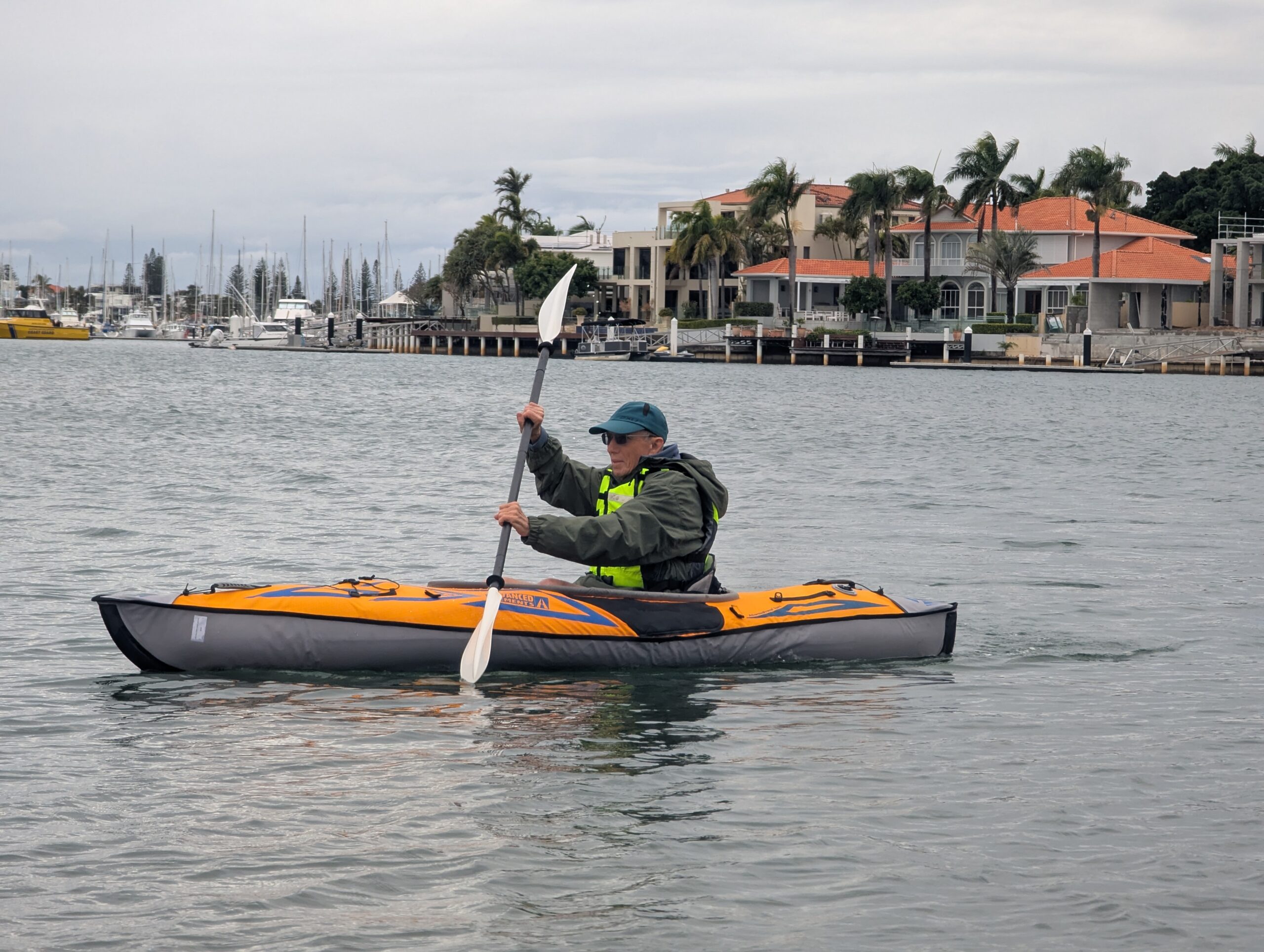
There is no age limit on wanting another beautiful morning on the water. Some paddlers over 60 are as strong and experienced as ever. Others are returning after a long break or want to make loading less of a production. The right gear should support the way you paddle, not ask you to fit an age stereotype.
Inflatable kayaks can be useful because they travel in a bag instead of on roof racks. They are not automatically the easiest choice: some bags are heavy, seats vary, and getting in and out is a personal test. This guide helps you check the full journey from the car to the water and back. If you are new to paddling, start with a calm place and company you trust.
01 / WHAT MAKES IT ENJOYABLE
Choose for your day, not your birthday
Kayaking over 60 can mean a relaxed half-hour on a protected river, a longer fitness paddle, fishing with a friend or a holiday stop at a quiet lake. Those are different jobs for a kayak. A low-profile sit-in boat may feel sheltered in a breeze; an open cockpit can offer a simpler entry for some paddlers; a wider hull can feel steady but may ask more effort to move quickly.
Before looking at a model, describe the outing you want. How far will you carry the bag? Is the launch a beach, a low bank or a pontoon? Will you paddle with someone? How much time do you want to spend on inflation and pack-down? Do you have a place to dry the boat? These questions reveal more than a label saying “senior-friendly.”
A good kayak removes friction
The best choice is the one you can load, set up, enter, paddle, exit and pack without a stressful moment. For some people that is an inflatable. For others it is a rigid kayak on a low trailer, or a lighter boat with a helper. Try the complete sequence.
02 / FIVE THINGS TO TEST
The little details that decide a great day
1 / The full bag
Lift the supplied kit, not a bare hull specification. Try it from the floor into your vehicle and from the car to the launch. A wheeled bag helps on firm ground but not on soft sand or steps. Choose a manageable carry distance.
2 / Entry and exit
Sit in the actual boat at a safe, shallow launch. Check how you step in, where you place your hands, and whether you can rise and get out without rushing. A wide cockpit can help, but height, bank shape and the seat position all change the experience.
3 / Seat and foot support
Notice your back support, leg position and whether your feet have a stable place to press. A supportive seat is more valuable than a low carry weight if you want to stay comfortable for an hour. Adjust the seat before judging a kayak.
4 / Wind and tracking
A kayak that wanders can make a gentle outing tiring. Shape, stiffness, fin, length and paddling technique influence the line it holds. Higher sides may catch more wind. Test on calm water and a mild breeze rather than trusting a brochure claim.
5 / The return trip
After paddling, can you land in the same place, step out safely and get the boat back into the bag? Decide where it can dry at home. The return routine is part of the purchase decision, not an afterthought.
03 / THREE USEFUL PERSONALITIES
Which kayak feels like yours?
These are starting points for a demo, not prescriptions based on age. Kayaking over 60 can be sporty, leisurely or a mix. Specifications below are distributor-published and should be checked against current listings.
AdvancedFrame Sport Elite · open cockpit, sheltered feel
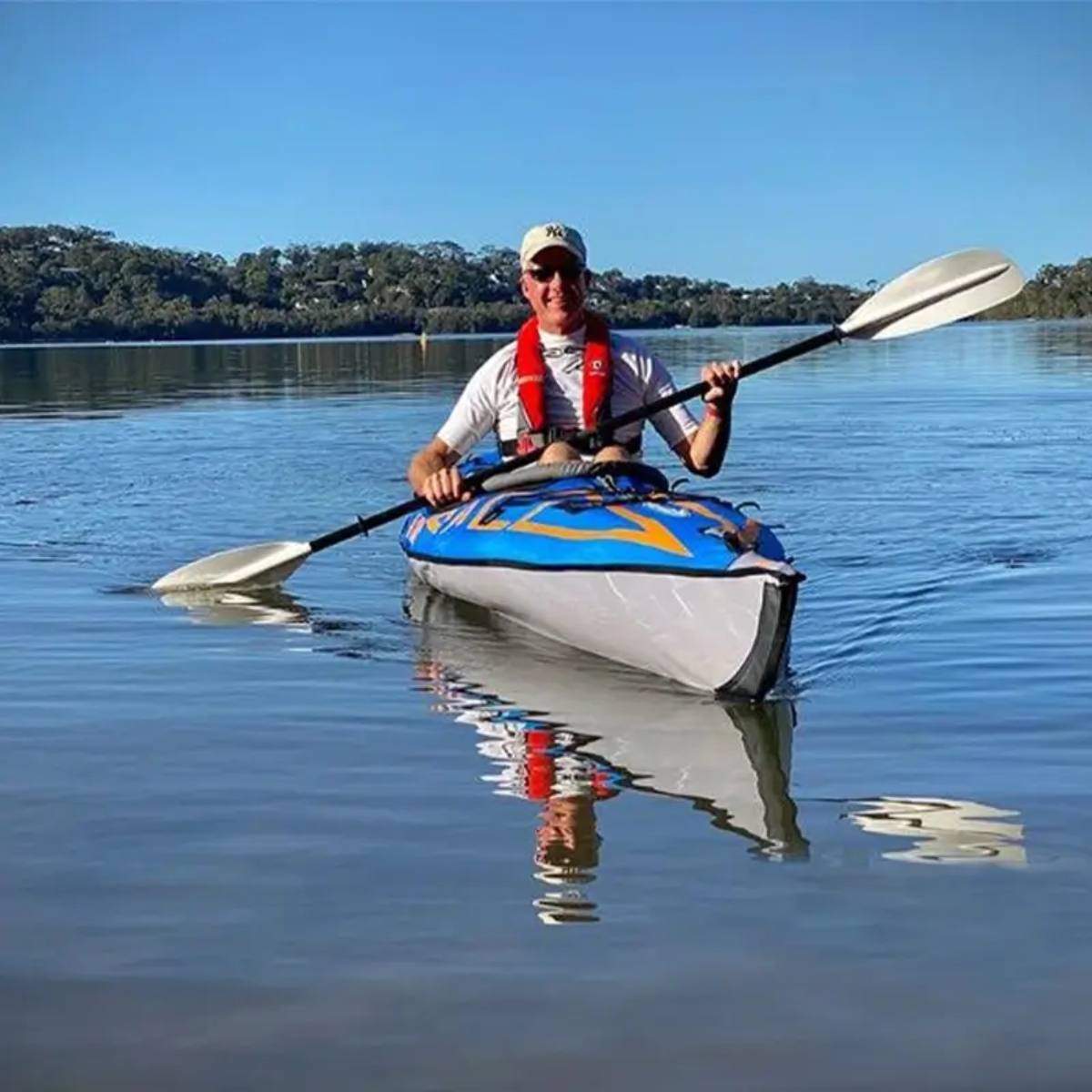
The Sport Elite has a broad entry and the shaped AdvancedFrame bow and stern with a firmer Elite floor. Its supplied kit is about 13.15 kg and packs to approximately 76 × 43 × 20 cm. Sit in it, adjust the seat and try the lift; the cockpit can suit one paddler beautifully and another may prefer more open room.
Jaspara Quest Solo · space and simple setup
The Quest Solo offers an open layout with room to move and a straightforward setup sequence. It is about 12.2 kg assembled but 16.95 kg as a supplied bag, approximately 113 × 49 × 38 cm. That difference is why the full-kit lift matters. Try its seat and entry against an AdvancedFrame.
AdvancedFrame Ultralite · very low carry weight, specific fit
The Ultralite is about 9.42 kg as a supplied kit, packed to roughly 78 × 45 × 15 cm. Its recommended paddler maximum is 80 kg and 183 cm. This can make a big difference when loading, provided its cockpit and capacity fit you. A lighter kayak is not necessarily the more comfortable one.
A tandem can also be appealing when you prefer to paddle with a partner, but it brings a heavier single bag and needs a shared launch routine. Compare the Jaspara family and Advanced Elements family before narrowing the shortlist. If you already own a rigid kayak you love, a loading aid or a different launch may be the simplest answer.
04 / MAKE THE FIRST RETURN EASY
A gentle plan for getting back on the water
Pick a protected local waterway and a calm forecast. Keep the first outing short enough that you finish wanting another one. Bring a friend or join a group, wear the correct PFD and let someone know where you will paddle. If you have not paddled recently, a lesson or a guided session can refresh technique and build confidence without pressure to cover distance.
At the launch, set up on a flat area free of sharp debris. Inflate the chambers to the stated pressure, fit the fin or skeg correctly, check valves, adjust the seat and foot position, and keep loose items secure. Spend a few minutes near shore learning how the kayak responds to a forward stroke, turn and gentle stop. Practise your landing and exit while you still feel fresh.
THE FIRST PADDLE
A familiar launch. A calm morning. A short route near shore. One clear return point. Plenty of time to enjoy it.
Then ask yourself: did the seat support you? Was the boat easy to track? Did you get out comfortably? Was loading manageable afterward? Those answers guide the second paddle and your equipment choice. You can increase distance gradually if the routine works for you.
05 / CONFIDENCE IS A SKILL
Enjoy the water with a sound plan
Age does not tell us what conditions a paddler can handle. Skill, health, weather, water and equipment do. Check the forecast, local hazards, current and tide where relevant. Paddle Australia encourages paddling with others, wearing a lifejacket and sharing a float plan. Maritime Safety Queensland has the current PFD requirements for Queensland waters. A fin or skeg helps tracking but cannot make a windy, exposed trip safe.
Practise entry, exit and what you would do after an unexpected swim in a controlled setting. Stay within a route you can return from in the conditions. If you have a health concern that changes exertion or balance, ask your clinician for advice suited to you; a generic blog cannot judge individual readiness.
Kayaking over 60 can be one enjoyable way to move more, spend time outside and stay connected with people. The Australian guidance for adults 65 and over recommends a mix of physical activity, including strength and balance. A paddle can be part of that mix; it is not a replacement for every kind of movement.
Try before you commit
Bring the vehicle you actually use. Lift the full bag, set up the boat, sit in it, launch, paddle, exit and pack. Our on-water demos let you compare the feel of different hulls instead of guessing from a photograph.
06 / QUICK ANSWERS
Kayaking over 60: common questions
Is an inflatable kayak easier to carry than a rigid one?
It can be, because it packs into a bag and avoids a roof lift. But compare the full-kit weight and the carry route. Some inflatables have large, heavy bags; a wheeled bag only helps on suitable ground.
Which style is easiest to get into?
There is no universal winner. An open cockpit can offer room, while a lower sit-in boat may feel more sheltered. Launch height, stability, seat position and your own movement matter. Try entry and exit at a safe, shallow launch.
Are inflatable kayaks reliable?
Specialist models can be reliable for suitable use when inflated and maintained as instructed. They are not puncture-proof. Inspect valves and hull, avoid sharp hazards, carry the right repair items and rinse and dry before longer storage.
Should I paddle alone?
Paddling with a companion or group is the stronger starting plan. Independent loading can be wonderful while still choosing company and a clear safety plan on the water.
Can I learn to kayak after 60?
Yes, many people begin or return later. Start with a suitable boat, calm water, a short route and instruction or a supportive group. Build technique and confidence at your own pace.
READY FOR YOUR OWN TEST?
Your next paddle can start here
Tell us where you want to go and what makes loading, entry or comfort important to you. We can compare real boats on the Sunshine Coast and find the routine you will enjoy repeating.
KEEP EXPLORING
The inflatable kayak guide series
Technical context: Sport Elite full kit, Quest Solo full kit, Ultralite full kit, Paddle Australia safety. Specifications and local rules should be checked before purchase or launch.